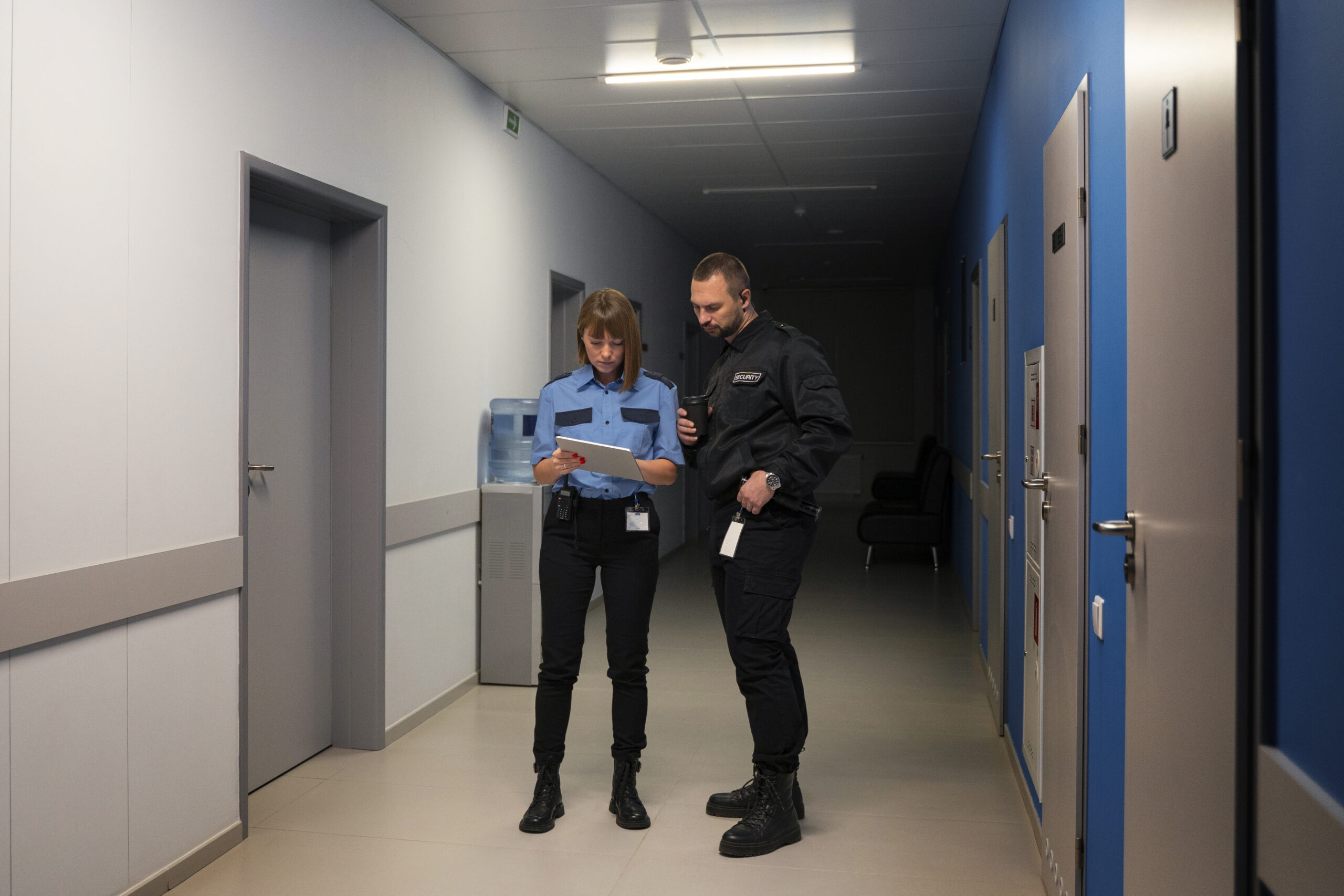
Internal Security

Level of study
Bachelor’s Degree Program

Studies mode:

Full-time

Duration
3 years

Obtained title
Bachelor Level Degree

Language of instruction
English

ABOUT THE STUDIES

Internal Security is a programme designed to respond to the changing security environment and to help students better understand the nature of contemporary internal and external threats, as well as effective ways of countering them.

Over the course of the three-year programme, students acquire theoretical and practical knowledge regarding the states security systems, as well as the role of the security services, public administration, civil society organisations and private companies within this system. Carefully selected modules will enable students to acquire the necessary knowledge regarding the management of the state security system in times of peace, crisis and war. Lectures are interspersed with practical sessions designed to develop students’ skills in Threat and Risk Assessment (TRA). At EWSPA, our experienced academic and teaching staff, together with leading experts in practical national security management, equip students with in-depth knowledge and skills in areas such as crisis management, organized crime, and counter-terrorism.

The Internal Security degree program opens the door to outstanding career opportunities, preparing students for roles across public institutions, private companies, and state security services.

The programme is delivered over 6 academic semesters (3 years) and concludes with a final examination, upon passing which the graduate is awarded a Bachelor’s degree.

STUDY PROGRAMME

1

A programme designed to help you stay ahead of the competition

The study programme includes a wide range of practical classes, which is an extremely important aspect of education at EWSPA, as the university operates on the principle that graduates should enter the competitive job market fully prepared to work in their dream profession, with the knowledge and skills that make them a sought-after candidate for potential employers.

2

A programme that genuinely prepares students for their profession.

The curriculum is structured to enable students to acquire general and theoretical knowledge, and then expand upon this through specialist subjects covering topics essential for professional practice. From the second semester onwards, students begin studying selected optional subjects, which are offered within two specialist pathways:  criminology and forensic science or international security.

3

Completion of the first-cycle degree in Internal Security will also provide a solid foundation for undertaking a second-cycle degree, including- following the completion of any necessary bridging modules- law studies offered at our University.

4

Modules broken down by subjects and specialisations.

The general education module includes courses such as:

  • Introduction to Sociology

  • Introduction to Legal Studies,
  • Human Rights Protection Systems,
  • Fundamentals of Constitutional Law,
  • Fundamentals of Civil Law,
  • Fundamentals of International law
  • Information technology.

The specialisations subject includes courses such as:

  • Legal protection system in Poland,
  • Cybersecurity,
  • National security system,
  • Contemporary communication and the role of the media in shaping security,
  • Air, Land, and Maritime Safety
  • Public Safety and Social
  • Community Safety and Security,
  • Security of Persons and Assets,
  • National defence systems,
  • Information Security: Classified and Confidential Data,
  • Sustainability and Environmental Security,
  • Cultural Property and National Heritage Protection System,
  • Social Conflicts in the Modern World
  • Security Challenges in South America,
  • Emergency and Crisis Situations,
  • Internal Security Planning,
  • Negotiations and mediation in crisis situations,
  • States of emergency,
  • Organisation and management
  • Security Challenges in Asia

Specialization course modules (elective) include:

Pathway – FORENSICS AND CRIMINOLOGY

  • Criminal proceedings, fundamentals of criminal law,
  • Criminal profiling,
  • Criminology and criminalistics,
  • Fundamentals of rehabilitation,
  • The prison service within the state security system,
  • Forensic psychology,
  • Forensic computing,
  • Polish services in the fight against crime,
  • Combating organised crime

Pathway – INTERNATIONAL SECURITY

  • Organisation of special services in Poland and worldwide,
  • Border protection and migration policy,
  • Combating domestic and international terrorism,
  • Civil-military cooperation,
  • EU civil protection mechanism,
  • International Customs Law,
  • CBRNE threats,
  • European criminal law,
  • Computer network security.

Foreign languages module include:

  • Foreign language.

Thesis preparation module include: 

  • Seminar.

Intership module include:

  • Internships.

Criminology and Forensic Science

Criminology deals with the study of the causes of crime, whilst forensic science focuses on investigative techniques related to the collection and analysis of evidence. Graduates who choose this specialisation will acquire knowledge in areas such as criminal law, rehabilitation, offender profiling and forensic psychology. The Criminology and Forensic Science programme offers a comprehensive approach, which prepares students for work in uniformed services, research institutions, private firms dealing with, amongst other things, the analysis of security incidents, detective agencies, as well as in social organisations working to assist victims of crime, protect human rights and support the proper functioning of the justice system.


International Security

International Security is a versatile and forward-looking educational pathway preparing students for the analysis of transnational threats (terrorism, hybrid conflicts, cyber threats) and crisis management in regional and global contexts. Students will learn, amongst other things, about the EU Civil Protection Mechanism (UCPM), the functioning of NATO and the operations of special services worldwide.

The programme opens the way to employment in international organisations and institutions, as well as in companies operating in global markets, particularly in the sectors of security, international logistics, risk analysis and strategic consultancy.

Where can you work after completing a degree in Internal Security?

  • in state and local government administration in crisis management and defense units,
  • in European Union institutions,
  • in uniformed services (including the Police, Municipal Police, Prison Service, Border Guard, State Fire Service, and Police),
  • in emergency services,
  • in commercial security firms providing protection for people and property.

FIND OUT HOW YOU CAN STUDY

The first-cycle, practice-oriented programme in Internal Security in Warsaw is offered on:

  • a full-time.

Classes and exams for full-time programs are held at the University’s Warsaw campus on dates set by the University, Monday through Friday.

Some classes may be conducted using distance learning techniques and methods. On the platform, students receive audio-video lectures that can be played anywhere and at any time, but above all, they also have access to webinars, i.e. lecture sessions enabling students to interact with the lecturer in real time.

Our e-learning platform is not only a source of online lectures but also a tool that enables students to expand and consolidate their knowledge. It contains additional teaching materials, discussions of key topics and various case studies. Furthermore, it includes revision materials, summaries, lecture notes, sample questions and practice tests.

Admission rules

  • Required documents

    The full set of documents must be submitted to the Admissions Office in person during office hours or by post/courier.

    The basic set of documents to be submitted to us includes:

    • Application form printed from the IRK system available from University’s website,
      Registration link:  Rekrutacja on-line 
    • The original or a copy of your school-leaving certificate; we also accept photocopies certified by a notary as true copies of the original. Certificates issued in a language other than Polish must be translated into Polish by a Polish sworn translator or by a foreign translator and certified by the relevant Consul of the Republic of Poland.
    • A certificate confirming proficiency in English-the language in which courses are taught as part of the degree program-at a level of at least B2, as listed in the document inventory specified in the Regulation of the Minister of Science and Higher Education,
    • Two recent photographs, meeting the same requirements as for an ID card (one photograph legibly signed with your first name and surname, along with your PESEL number),
      Check what the photograph should look like>>>
    • Proof of payment: recruitment fee, registration fee and ID card fee,
    • Visa, ID card or passport for inspection,
    • Study contract in two copies. Please read the contract carefully and tick the selected study option.

    *If you have changed your last name since graduating from high school (obtaining your high school diploma) or college, please provide the document serving as the basis for this change.
    Documents issued in a language other than Polish must be translated into Polish by a Polish sworn translator or by a foreign translator.

  • Required documents for foreign nationals


    General Information
    Foreign nationals-those who are not Polish citizens-participate in the admissions process under the same conditions as Polish citizens. The first step in the admissions process is online registration. Visit the website: :On-line admissions

    **Individuals who hold Polish citizenship as well as the citizenship of another country or several other countries are, by law, treated as Polish citizens within the territory of the Republic of Poland.

    If an international applicant does not have a PESEL number at the registration stage, they should check the box labeled “I do not have a PESEL number.”

    Required documents:

    • Application form printed from the IRK system available from University’s website,
      Registration link:  Rekrutacja on-line 
    • A secondary school leaving certificate issued by a school or educational institution entitling the holder to apply for admission to higher education in their country of origin; if the
      document does not contain a note confirming the right to apply for admission to higher education in the country of issue, a certificate issued by a Polish consulate, school or the
      education authorities of the relevant country, confirming this right, must be attached. Certificates issued in a language other than Polish must be translated into Polish by a Polish sworn translator or by a foreign translator and certified by the relevant Consul of the Republic of Poland.
    • A school-leaving certificate issued abroad, entitling the holder to apply for admission to higher education in the country of issue, recognised – on the basis of regulations on the
      recognition of certificates – as equivalent to a school-leaving certificate issued within the territory of the Republic of Poland. In the case of certificates issued in, for example, Belarus,
      information from the Director of NAWA regarding the certificate is required. Certificates issued in a language other than Polish must be translated into Polish by a Polish sworn translator or by a foreign translator and certified by the relevant Consul of the Republic of Poland.
    • A certificate confirming proficiency in English-the language in which courses are taught as part of the degree program-at a level of at least B2, as listed in the document inventory specified in the Regulation of the Minister of Science and Higher Education,
    • Two recent photographs, meeting the same requirements as for an ID card (one photograph legibly signed with your first name and surname, along with your PESEL number),
      Check what the photograph should look like>>>
    • Proof of payment: recruitment fee, registration fee and ID card fee,
    • Visa, ID card or passport for inspection,
    • Study contract in two copies. Please read the contract carefully and tick the selected study option.

    Admission requirements:

    • Applicants with foreign documents certifying their eligibility to pursue higher education are required, in accordance with the admissions resolution, to take an entrance exam conducted in English.

Tution

Internal Security

Initial fees:

85zł – Application fee

22 zł – Student ID fee

500zł – Enrolment fee

Full-time studies

6 x 3 800 zł
semester fee for the entire duration of the program

Skip to content